
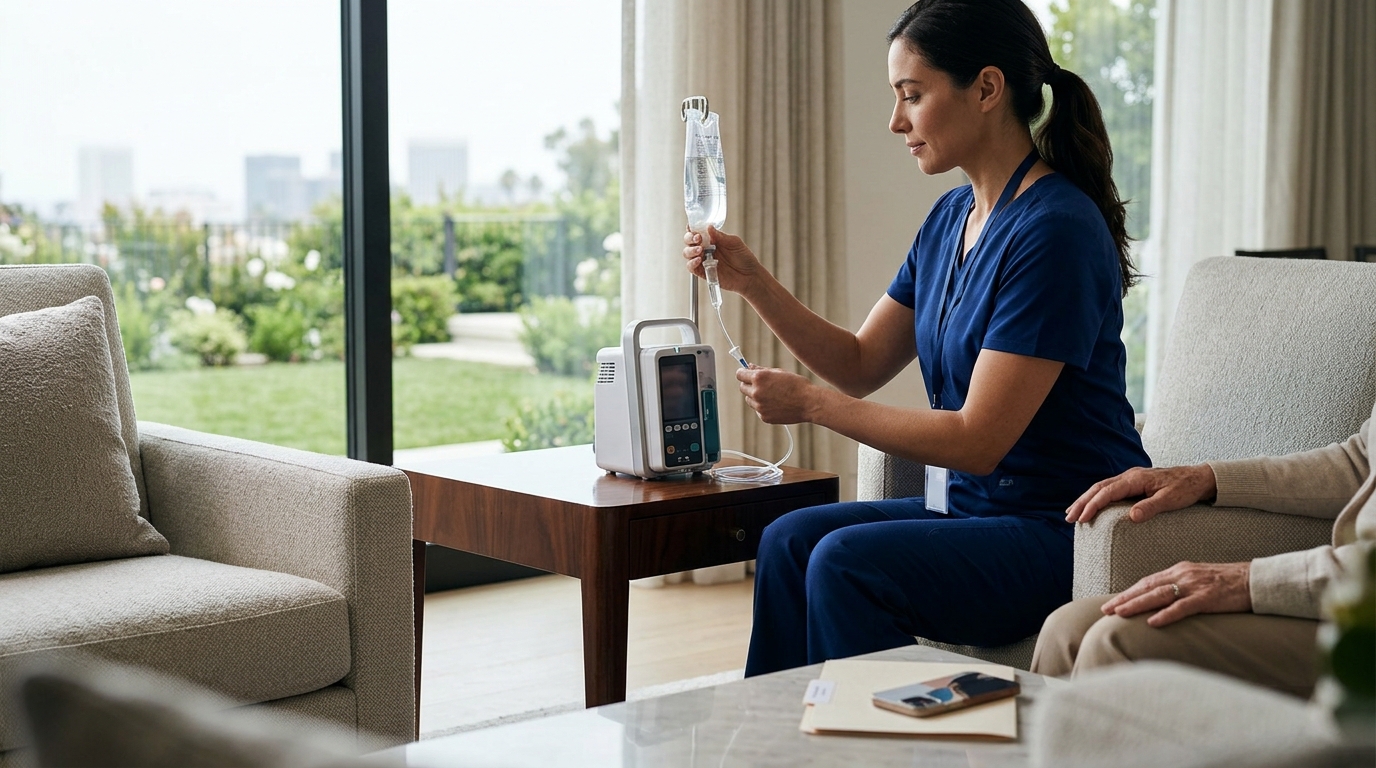
Physicians, specialty infusion pharmacies, and hospital discharge planners are the primary entities that refer nurses for in-home infusion therapy in Beverly Hills. These three groups initiate the clinical pathway that connects patients with qualified private duty Registered Nurses (RNs) capable of administering complex IV therapies in a residential setting. This guide details the specific referral workflows, regulatory requirements, and coordination protocols used by these three referral sources. It also explains how Century City Concierge Nursing integrates into these pathways to ensure safe, compliant, and seamless care delivery for patients in Beverly Hills and the greater Los Angeles area. For additional details, review the centurycityconcierge com.
Physician Referrals
Physician referrals constitute the most common entry point for in-home infusion therapy. A physician referral is a formal clinical directive issued by a treating doctor that authorizes a specific medical procedure in a non-hospital setting. In Beverly Hills, this typically involves specialists in oncology, rheumatology, infectious disease, or cardiology who determine that a patient's condition requires IV administration but does not necessitate inpatient hospitalization. For additional details, review the .
The Clinical Authorization Process
The process begins with a comprehensive medical evaluation. The physician must document the patient's medical stability, the specific infusion protocol, and the required monitoring parameters. This documentation serves as the legal and clinical foundation for the home infusion order. The physician must also specify the frequency of visits, the duration of each infusion, and any emergency protocols that the visiting nurse must follow. For additional details, review the Customer Experience.
Coordination with Private Duty Nursing
Specialty Infusion Pharmacies
Specialty infusion pharmacies play a critical role in the referral chain, particularly for complex or high-cost medications. A specialty infusion pharmacy is a licensed facility that compounds, prepares, and dispenses specialized IV medications that are not available through standard retail pharmacies. These pharmacies often have direct relationships with nursing agencies and can initiate referrals when they identify a need for home administration. For additional details, review the Frequently Asked Questions.

Medication-Specific Referral Triggers
Referrals from specialty pharmacies are often triggered by the nature of the medication itself. For example, certain biologic agents used in rheumatology or oncology require specific storage conditions and administration techniques that are best handled by a specialized RN. The pharmacy may recommend a home infusion service to ensure that the medication is administered correctly and that any adverse reactions are managed promptly. This collaboration ensures that the drug delivery system aligns with the clinical expertise of the nursing provider. For additional details, review the About.
Logistical and Supply Chain Coordination
In Beverly Hills, the proximity of high-end specialty pharmacies to residential areas facilitates this coordination. The partnership between the pharmacy and the nursing agency creates a closed-loop system where medication management and clinical care are seamlessly integrated. This approach is particularly beneficial for patients with chronic conditions that require long-term IV therapy.
Hospital Discharge Planning
Hospital discharge planning is a structured process that ensures a safe transition from inpatient care to a home or community setting. A hospital discharge planner is a healthcare professional, often a social worker or case manager, who coordinates the resources needed for a patient's post-hospitalization care. In the context of infusion therapy, discharge planners identify patients who require ongoing IV treatments and arrange for the necessary nursing support.
Identifying Infusion Needs at Discharge
During the hospital stay, the medical team assesses the patient's progress and determines the optimal setting for continued care. If the patient is medically stable but still requires IV antibiotics, chemotherapy, or other infusions, the discharge planner initiates the referral process. This involves contacting nursing agencies to secure a qualified RN for the post-discharge period. The planner ensures that the agency has all relevant medical records, including the discharge summary and infusion orders.
Seamless Transition Protocols
Century City Concierge Nursing works closely with hospital discharge planners to facilitate a smooth transition. The agency assigns a nurse who is familiar with the patient's hospital course and the specific infusion protocol. This continuity of care reduces the risk of errors and ensures that the patient feels supported during the transition. The agency also coordinates with the patient's primary care physician to ensure that the home infusion plan aligns with the overall treatment strategy.
Referral Source Comparison
| Referral Source | Primary Role | Key Responsibilities | Typical Timeline |
|---|---|---|---|
| Physician | Clinical Authorization | Medical evaluation, prescribing, protocol definition | Pre-treatment or ongoing |
| Specialty Pharmacy | Medication Management | Compounding, dispensing, supply coordination | At prescription or refill |
| Hospital Discharge Planner | Transition Coordination | Needs assessment, agency selection, record transfer | At hospital discharge |
Key Takeaways
- Physicians are the primary clinical authority for in-home infusion therapy, issuing the orders that define the scope of care.
- Specialty infusion pharmacies often initiate referrals based on the specific requirements of the medication being dispensed.
- Century City Concierge Nursing integrates with all three referral sources to provide seamless, compliant, and private care.
- Effective coordination between these referral sources is critical for ensuring patient safety and treatment continuity.
- The choice of nursing agency often depends on the agency's ability to meet the specific clinical and logistical needs of the referral source.
- Privacy and discretion are key considerations for patients in Beverly Hills, influencing the selection of the nursing provider.
- Regular communication between the referral source, the nursing agency, and the patient is essential for successful home infusion therapy.
Frequently Asked Questions
Who can refer a nurse for in-home infusion therapy?
Physicians, specialty infusion pharmacies, and hospital discharge planners can all refer nurses for in-home infusion therapy. Each of these entities plays a distinct role in the referral process, from clinical authorization to logistical coordination.
What is the role of a physician in the referral process?
The physician provides the clinical authorization for the infusion therapy. They evaluate the patient's medical condition, prescribe the specific medication, and define the protocol for administration. The physician retains ultimate clinical authority over the treatment plan.
How do specialty pharmacies initiate referrals?
Specialty pharmacies may initiate referrals when they identify a need for home administration of a specific medication. They coordinate with nursing agencies to ensure that the medication is delivered and administered correctly. This collaboration ensures that the drug delivery system aligns with the clinical expertise of the nursing provider.
What is the role of a hospital discharge planner?
A hospital discharge planner coordinates the transition from inpatient care to a home setting. They identify patients who require ongoing IV treatments and arrange for the necessary nursing support. The planner ensures that the nursing agency has all relevant medical records and that the care plan is in place before the patient is discharged.
How does Century City Concierge Nursing integrate with these referral sources?
Century City Concierge Nursing works directly with physicians, specialty pharmacies, and hospital discharge planners to ensure seamless care delivery. The agency assigns qualified RNs who meet the specific competency requirements for the prescribed therapy. The agency also facilitates direct communication between the referral source and the nurse to clarify any clinical questions.
What are the benefits of in-home infusion therapy?
How is privacy maintained during in-home infusion therapy?
Privacy is maintained through the selection of a reputable nursing agency that emphasizes confidentiality. Century City Concierge Nursing prioritizes privacy and discretion, ensuring that the care environment remains confidential. The agency also trains its nurses to respect the patient's personal space and preferences.
What qualifications are required for a nurse to perform in-home infusion therapy?
Nurses must be licensed Registered Nurses (RNs) with specific experience in IV therapy and the administration of the prescribed medication. They must also be trained in emergency protocols and have the necessary competency to monitor the patient's response to the infusion. Century City Concierge Nursing ensures that all its nurses meet these qualifications. Learn more: centurycityconcierge com.